

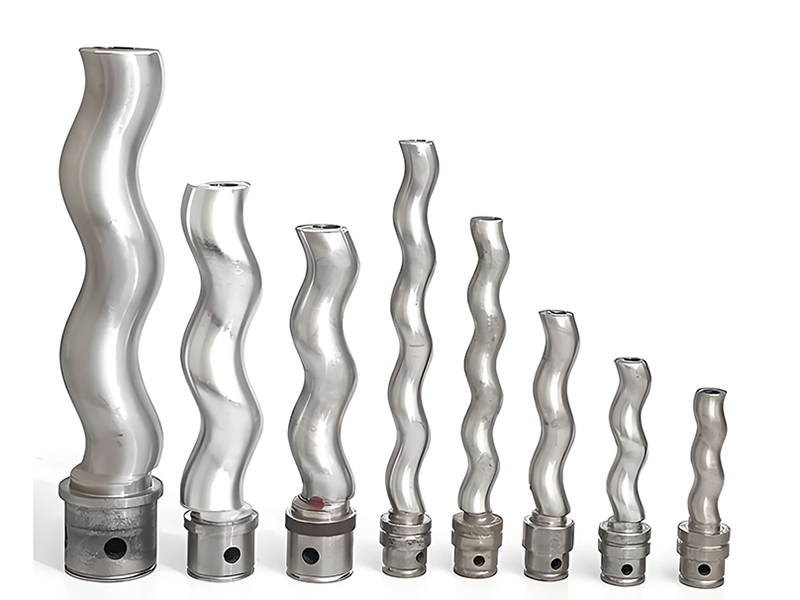
Vertical screw pumps are increasingly selected in modern water treatment and wastewater treatment plants
because they combine gentle conveying, high efficiency and reliable operation under demanding hydraulic
conditions. This in?depth, SEO?optimized guide presents case?style insights into how vertical screw pumps
are used across the water industry, including definitions, design principles, advantages, specifications,
and typical application scenarios.
A vertical screw pump is a positive displacement pump in which a helical screw (or multiple screws) rotates
inside a stationary housing or trough, installed in a vertical or steeply inclined position. As the screw
rotates, water or wastewater is trapped in cavities formed between the screw flights and the casing, then
gently lifted from a lower elevation to a higher elevation.
In water treatment and wastewater treatment, vertical screw pumps are used to lift influent, raw sewage,
screened wastewater, sludge, return activated sludge, storm water and various process streams where
reliability, low shear and debris tolerance are essential.
When engineers consider pumping solutions for water treatment plants, vertical screw pumps are compared
with Submersible centrifugal pumps, axial flow pumps, and Progressive cavity pumps. The vertical screw
pump is unique because it offers:
A vertical screw pump used in water treatment typically consists of:
The vertical orientation reduces footprint while providing the necessary lift for many water treatment
applications, especially when available land is limited or when deep wet wells are required.
Water treatment plant designers often select vertical screw pumps because they offer numerous mechanical,
hydraulic and operational advantages compared with many other pump types.
When evaluating vertical screw pumps for water treatment case studies, certain technical parameters are
repeatedly referenced. Understanding these parameters helps in pump selection and system design.
| Parameter | Typical Range in Water Treatment | Description / Relevance |
|---|---|---|
| Flow rate (Q) | 10 – 5,000 m3/h or more | Volume of water or wastewater lifted by the vertical screw pump. |
| Total dynamic head (H) | 1 – 20 m (commonly 3 – 10 m) | Vertical lift plus hydraulic losses in channels and fittings. |
| Rotational speed (n) | 20 – 80 rpm | Determines flow, shear and wear; lower speed = gentler pumping. |
| Efficiency (η) | Up to 75 – 85% | Conversion of mechanical power into hydraulic power. |
| Screw diameter (D) | 300 – 3,000 mm | Directly affects capacity and allowable solids size. |
| Inclination angle | 30° – 90° (vertical) | Defines lift height and footprint requirements. |
| Number of flights | Single, double or triple | Influences capacity, smoothness and efficiency of conveying. |
| Solids content | 0 – 8% dry solids, depending on design | Important for sludge and thickened sludge pumping. |
| Liquid temperature | 0 – 60 °C (typical) | Impacts material selection and seal design. |
| Material of construction | Carbon steel, stainless steel, coatings | Selected according to corrosion and abrasion conditions. |
In water and wastewater treatment case studies, the hydraulic design of vertical screw pumps is closely
linked to plant layout, wet well design and elevation of downstream units. Important aspects include:
Vertical screw pumps are used throughout the water cycle, from raw water intake to tertiary treatment and
sludge handling. Different case studies usually fall into some well?defined application categories.
Industrial sectors such as food processing, paper mills, chemical plants and mining often integrate
vertical screw pumps in their water treatment and wastewater pretreatment systems to handle:
The following case?style scenarios are generalized examples synthesizing typical industry experience with
vertical screw pumps in water treatment. They illustrate how design choices and operating conditions affect
performance and plant outcomes.
A medium?sized municipal wastewater treatment plant needed to lift raw sewage from a deep interceptor sewer
to the headworks for screening and grit removal. The existing pumping station had multiple submersible
centrifugal pumps that experienced frequent clogging due to rags, wipes and sand. Operators needed a more
reliable, low?maintenance solution with lower energy consumption.
The engineering team evaluated vertical screw pumps as an alternative. Two parallel vertical screw pumps
were selected with the following approximate characteristics:
| Design Aspect | Selected Value | Reasoning |
|---|---|---|
| Number of pumps | 2 duty + 1 standby | Redundancy for maintenance and peak flows. |
| Flow per pump | Up to ~1,600 m3/h | Each pump handles average flow with one in reserve. |
| Lift height | 7 m | Matches static lift plus minor hydraulic losses. |
| Screw diameter | Approximately 1,600 mm | Large opening for solids passage and high capacity. |
| Inclination angle | 45° to 60° | Balance between footprint and conveying efficiency. |
| Motor power | Approx. 55 – 75 kW | Designed for expected duty point and efficiency. |
After installation, the plant observed the following:
operating range.
consistently.
A biological wastewater treatment plant using activated sludge technology needed to pump return activated
sludge (RAS) from secondary clarifiers back to aeration basins. Existing centrifugal RAS pumps caused
floc breakup and shear, negatively affecting sludge settleability and plant effluent quality.
A vertical screw pump system was selected for one clarifier as a pilot project. The configuration included:
Over several months of operation, plant staff recorded:
Based on this case, the facility gradually replaced additional RAS pumps with vertical screw pumps to
standardize equipment and process conditions.
A wastewater treatment plant produced primary and secondary sludge that needed to be transferred to a
gravity thickener and mechanical thickening system. The sludge varied in solids content and contained
grit and small debris. Progressive cavity pumps experienced stator wear and frequent maintenance.
Engineers considered vertical screw pumps to lift sludge from a collection pit up to the thickening
system. Design features included:
The vertical screw pump system provided:
Engineers working on water treatment projects must carefully select and size vertical screw pumps. The
following guidelines summarize key steps frequently documented in successful case studies.
In water treatment applications, vertical screw pumps are often integrated into automated control systems.
Common control features include:
The table below provides a generalized specification summary for vertical screw pumps typically used in
water and wastewater treatment facilities. Actual project requirements will vary, but these ranges are
representative of common case studies.
| Specification | Typical Values / Options | Application Notes |
|---|---|---|
| Pump type | Vertical screw, inclined screw, enclosed screw | Selected based on layout, odor control and structural constraints. |
| Capacity | 10 – 5,000 m3/h per pump | From small package plants to large municipal works. |
| Head | 1 – 20 m | Typically lower heads for influent lifting and RAS pumping. |
| Speed | 20 – 80 rpm | Low speed enhances durability and low shear operation. |
| Drive | Electric motor + gearbox, VFD optional | VFD allows variable speed control for process optimization. |
| Power rating | 5 – 400 kW or higher | Depends on duty conditions and equipment size. |
| Materials (screw) | Carbon steel, stainless steel, wear?resistant coatings | Selected for corrosion and abrasion resistance. |
| Materials (trough/casing) | Concrete, steel, stainless steel, composite | Influenced by site conditions and design life expectations. |
| Bearings | Heavy?duty roller bearings, thrust bearings | Designed for vertical load and continuous operation. |
| Seals | Mechanical seals, labyrinth seals, lip seals | Depend on immersion level, solids content and maintenance philosophy. |
| Installation angle | 30° to 90° | Steep angles reduce footprint but require more structural support. |
| Solids handling ability | Large solids, rags, fibrous material | Well suited to raw sewage and sludge applications. |
| Typical applications | Influent lift, RAS, WAS, sludge, storm water, raw water | Covers the majority of municipal water and wastewater uses. |
Long?term reliability is a major theme in vertical screw pump case studies. Water treatment plants aim to
minimize unplanned shutdowns and costly interventions.
| Issue | Possible Causes | Mitigation Measures |
|---|---|---|
| Reduced capacity | Wear of screw edges, low water level, obstruction | Inspect and refurbish screw, adjust control levels, remove debris. |
| Vibration or noise | Imbalance, misalignment, bearing wear | Check alignment, balance screw, replace bearings as needed. |
| Leakage at seals | Seal wear, incorrect installation, high pressure | Replace seals, verify installation procedure, review design head. |
| High energy usage | Operating far from design point, mechanical resistance | Adjust operating strategy, inspect for obstructions or wear. |
Across many documented water treatment installations, vertical screw pumps consistently demonstrate:
Environmental performance is a growing focus for water treatment plants. Vertical screw pumps can make a
positive contribution to sustainability goals.
Because vertical screw pumps typically operate with high hydraulic efficiency and low mechanical losses,
their energy consumption compares favorably with many conventional pump types under similar conditions.
Over the lifetime of a water treatment asset, this translates to lower operating costs and reduced
greenhouse gas emissions associated with electricity usage.
With low rotational speeds, vertical screw pumps often produce lower noise levels than high?speed
centrifugal pumps. This characteristic is useful in urban water treatment facilities where noise
regulations must be respected.
In some installations, vertical screw pumps are enclosed in casings or housings to reduce odor and aerosol
emissions from wastewater. Such designs can be integrated into odor control systems to capture and treat
foul air from headworks and pump stations.
When selecting pumping equipment for water treatment case studies, a comparative assessment is often
performed. The following table summarizes general comparisons.
| Feature | Vertical Screw Pump | Submersible Centrifugal Pump | Progressive Cavity Pump |
|---|---|---|---|
| Solids handling | Very good, passes large debris | Moderate, prone to clogging with rags | Good but sensitive to large solids |
| Shear on media | Low shear, gentle | Higher shear | Moderate shear |
| Efficiency | High in designed range | Variable; may drop at part load | Moderate, depends on condition |
| Maintenance environment | Mostly dry and accessible | Underwater, requires lifting | Dry but more components |
| Typical applications | Influent, RAS, sludge, storm water | General wastewater pumping | Thick sludge, dosing, high pressures |
| Initial cost | Moderate to high | Moderate | Moderate |
| Lifecycle cost | Often low due to energy and reliability | Varies with clogging frequency | Can be high due to stator wear |
Implementing vertical screw pumps in a water treatment facility involves several planning steps that are
frequently highlighted in case studies.
Vertical screw pumps play a crucial role in contemporary water and wastewater treatment plants. Their
ability to gently and efficiently lift water, sewage and sludge while handling debris and solids makes
them a reliable choice for many critical applications, including influent lift stations, return activated
sludge pumping, storm water management and sludge transfer.
Across a wide range of case studies, vertical screw pumps consistently demonstrate advantages in energy
efficiency, clogging resistance, process stability and long?term reliability. When properly selected,
designed and maintained, they provide a robust and sustainable solution that supports the overall
performance and environmental goals of water treatment facilities.
Engineers, plant managers and decision makers can use the information, specification ranges and
application examples in this guide as a starting point for evaluating vertical screw pumps in their own
water treatment projects and for developing project?specific case studies that document performance
improvements over time.
```

Copyright ? Jiangsu Longjie Pump Manufacturing Co., Ltd.



 Phone
Phone
Comment
(0)