

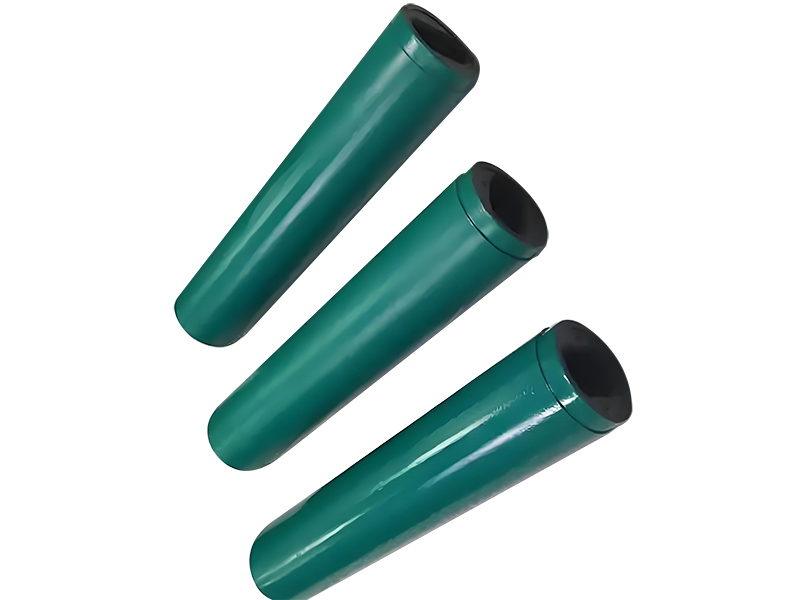
Vertical screw pumps play a critical role in modern industrial facilities by moving challenging fluids
reliably, efficiently, and safely. From wastewater treatment and chemical processing to power generation
and food production, vertical screw pumps help optimize fluid movement wherever high-viscosity, abrasive,
or solids-laden liquids must be transferred, lifted, or dosed with precision.
A vertical screw pump is a positive displacement pump that uses one or more helical rotors arranged in a
vertical orientation to move fluid axially from a lower level to a higher discharge point. Unlike
centrifugal pumps, which impart kinetic energy to the liquid, vertical screw pumps transport fluid by
trapping it in cavities formed between the screw(s) and the pump casing, then pushing it upward with each
rotation.
In industrial settings, vertical screw pumps are widely used where:
Because of their vertical configuration, these pumps can be installed directly in pits, shafts, or process
vessels, minimizing suction pipe length and improving net positive suction head (NPSH) conditions.
Although configurations vary, most vertical screw pumps share several common design features that are
responsible for their superior performance in industrial fluid movement.
Many vertical screw pumps employ a single-screw rotor turning inside a molded stator (progressive cavity
design), or multiple intermeshing screws rotating inside a tight-tolerance casing. In both cases, sealed
cavities are formed that progress along the pump axis and carry the fluid upward.
The rotors are mounted on a vertical shaft driven by a motor and gearbox located at the top of the pump.
This arrangement:
Vertical screw pumps use thrust and radial bearings to support the vertical shaft and absorb axial loads.
Mechanical seals or packed glands are typically used at the drive end to prevent leakage. In submerged
designs, lower bearing components may be lubricated by the pumped fluid itself or by external lubrication
systems.
The pump casing is designed to withstand high pressures and abrasive service. Common materials include
cast iron, carbon steel, stainless steel, duplex stainless steel, and specialized alloys or coatings for
corrosive or erosive environments. Elastomeric stators or liners are chosen based on chemical compatibility
with the pumped media.
As positive displacement pumps, vertical screw pumps deliver flow that is nearly proportional to speed and
largely independent of discharge pressure within the design range. Pump capacity is typically controlled
using:
Understanding the working principle of vertical screw pumps clarifies why they are so effective in
optimizing fluid movement in industrial settings.
In a typical single-screw vertical pump:
The suction end of the pump is submerged in the fluid to be pumped, or connected to a suction line
leading from the fluid source.
As the helical rotor turns inside the stator, cavities form between the rotor and stator profiles.
These cavities are sealed from one another and progress upward as the rotor turns, trapping discrete
volumes of fluid.
The trapped fluid is transported along the length of the stator and discharged at the top of the pump
into the discharge piping.
In multi-screw vertical pumps, two or more screws intermesh and rotate in opposite directions. Fluid is
carried in sealed channels between the screw flanks and the casing, moving axially from the suction to the
discharge end.
Because fluid velocity inside the cavities is relatively low and there is minimal turbulence, vertical
screw pumps provide gentle, low-shear handling. This is particularly valuable in:
Many vertical screw pumps offer self-priming capability, meaning they can evacuate air from the suction
line and begin pumping fluid without manual priming. The vertical immersion design also naturally helps
maintain a flooded suction, further improving reliability.
Vertical screw pumps provide a combination of mechanical and hydraulic advantages that help optimize fluid
movement across a wide range of industrial processes.
Many industrial processes involve fluids that are thick, sticky, or exhibit complex rheological behavior,
such as:
Vertical screw pumps maintain volumetric efficiency across a broad viscosity range, ensuring stable flow
where centrifugal pumps would suffer from severe efficiency loss.
The vertical orientation minimizes horizontal space usage and allows installation directly in:
This compact footprint is particularly beneficial in retrofits, congested plants, and offshore or
shipboard installations, where available floor area is limited.
By vertically immersing the pump or positioning it directly above the fluid source, suction line length is
reduced and friction losses are minimized. This improves net positive suction head available (NPSHa) and
helps prevent cavitation, which can damage pumps and reduce reliability.
Vertical screw pumps deliver nearly continuous flow with minimal pressure pulsation. This characteristic
improves:
Because flow is mainly a function of speed and not significantly influenced by pressure, vertical screw
pumps can maintain good efficiency over a wide range of heads. When equipped with variable frequency drives,
overall system efficiency is further enhanced.
With proper design and material selection, vertical screw pumps can pass suspended solids, fibrous material,
and abrasive particles. This is indispensable in applications such as:
Vertical screw pumps are available in several installation configurations:
This flexibility allows engineers to tailor pump installation to site constraints and process layout.
Smooth, continuous displacement and robust construction result in low noise and vibration compared with
many other positive displacement technologies. This contributes to a safer and more comfortable working
environment and can reduce structural stress on connected piping.
Vertical screw pumps are deployed across numerous process industries. Their ability to optimize fluid
movement is most evident in demanding environments where reliability, efficiency, and robust performance
are essential.
In municipal and industrial wastewater treatment plants, vertical screw pumps are used for:
These applications demand pumps that can handle fibrous materials, grit, and variable solids content
without frequent clogging or loss of performance.
In the chemical and petrochemical sectors, vertical screw pumps transport:
The combination of controlled flow, high pressure capability, and material versatility makes vertical screw
pumps particularly valuable in these environments.
Power plants employ vertical screw pumps for:
In food and beverage processing, vertical screw pumps move:
Gentle handling minimizes product damage and maintains texture and quality.
Pulp and paper mills use vertical screw pumps for:
In mining operations, vertical screw pumps are applied to:
Their rugged construction and ability to handle solids-laden fluids make them a reliable choice in harsh,
abrasive environments.
When designing fluid movement systems, engineers often compare vertical screw pumps with other pump
technologies. Each has strengths and limitations. The table below summarizes typical differences in
performance characteristics.
| Characteristic | Vertical Screw Pump | Centrifugal Pump | Vertical Turbine Pump | Gear Pump |
|---|---|---|---|---|
| Operating Principle | Positive displacement, helical screw cavities | Dynamic, kinetic energy conversion | Dynamic, multi-stage impellers | Positive displacement, meshing gears |
| Viscosity Handling | Excellent, wide range including very high viscosities | Limited, performance drops with viscosity | Moderate, mainly low to medium viscosity | Good to excellent, depends on design |
| Solids Tolerance | Good, can handle suspended solids and slurries | Variable, typically low to moderate | Low, generally clean liquids | Low, typically requires clean fluids |
| Flow Pulsation | Low, near-continuous flow | Low, smooth flow | Low, smooth flow | Higher, requires damping for some processes |
| Efficiency with Varying Pressure | Stable efficiency across a range of pressures | Efficiency strongly depends on operating point | High efficiency near design point | Stable, but can suffer at very high pressures |
| Self-Priming Capability | Often self-priming; vertical immersion improves suction | Usually non-self-priming | Non-self-priming | Generally good self-priming |
| Shear on Product | Low shear, gentle handling | Moderate to high shear | Moderate shear | Moderate shear |
| Installation Footprint | Small horizontal footprint, vertical installation | Larger footprint, horizontal or vertical | Vertical, but requires significant headroom | Compact, mostly horizontal |
| Typical Applications | Sludge, slurries, viscous fluids, sumps | Water, thin liquids, high flow applications | Deep wells, cooling water intake, irrigation | Lubrication, fuel transfer, hydraulic oils |
This comparison shows that vertical screw pumps occupy a unique niche where high-viscosity fluids, solids,
and limited plant space must all be addressed simultaneously.
Vertical screw pumps are available in a wide range of sizes, capacities, and pressure ratings. The exact
specifications depend on the design, target industry, and process requirements. The table below presents
indicative ranges commonly encountered in industrial applications.
| Specification | Typical Range | Notes |
|---|---|---|
| Flow Rate | 0.1 to 500 m3/h (0.5 to 2,200 gpm) | Small dosing units to large transfer pumps |
| Discharge Pressure | Up to 48 bar (700 psi) or higher for some designs | Depends on number of stages and screw geometry |
| Viscosity Range | 1 to >1,000,000 cP | From water-like fluids to pastes and gels |
| Temperature Range | -20°C to +200°C (-4°F to +392°F) | Material selection and elastomer choice are critical |
| Solids Content | Up to 40% by volume, depending on particle size and shape | Higher solids possible with specific designs |
| Installation Depth | Up to 10 m (33 ft) or more immersion | Extended shafts for deep sumps and pits |
| Materials of Construction | Cast iron, carbon steel, stainless steel, duplex alloys, elastomers | Chosen based on corrosion, temperature, and abrasion |
| Drive Type | Electric motor with gearbox, VFD controlled | Occasionally hydraulic or mechanical drives |
These ranges are indicative only. For any specific industrial setting, engineers must consult detailed
technical data sheets and performance curves for the chosen vertical screw pump model.
Vertical screw pumps contribute to optimized fluid movement in industrial environments in several
interrelated ways. Their design characteristics reduce energy consumption, increase process reliability,
and streamline plant layouts.
By maintaining high volumetric efficiency across a wide range of viscosities and pressures, vertical screw
pumps minimize wasted energy. When integrated with variable frequency drives and intelligent control
systems, energy use can be further optimized by matching pump speed to real-time process demand rather than
running at constant speed and throttling with valves.
Accurate, linear flow-speed relationships simplify process control strategies. Operators can adjust pump
speed to achieve precise flow rates, improving:
Consistent flow also reduces the risk of process upsets and quality deviations.
Vertical screw pumps are engineered for long service life under demanding conditions. Their ability to
handle solids and viscous fluids without frequent clogging or overheating leads to:
In addition, the vertical arrangement allows easier access to the drive and upper bearing assemblies, which
simplifies routine maintenance tasks.
Vertical installation often means fewer horizontal pipe runs and joints, which reduces potential leak
points and simplifies secondary containment strategies. In sumps and pits, vertical screw pumps can be
installed within protective structures that limit exposure to hazardous fluids.
Space utilization is a major design constraint in many industrial settings. Vertical screw pumps can be
installed within or directly above tanks, pits, and basins, freeing up floor space for other equipment and
access routes. This can be critical in brownfield upgrades where rearranging existing infrastructure is
difficult or expensive.
Proper selection of a vertical screw pump is vital for safe, reliable, and efficient operation. Engineers
and specifiers must evaluate both fluid characteristics and system requirements.
Key fluid parameters include:
System-level requirements must also be considered:
Mechanical and installation factors include:
Depending on the sector and region, vertical screw pump design may need to comply with specific standards
or guidelines related to:
To fully realize the benefits of vertical screw pumps in optimizing fluid movement, operators should follow
best practices in start-up, operation, and maintenance.
Preventive maintenance extends the life of vertical screw pumps and prevents unplanned outages:
Advanced facilities may employ condition monitoring technologies for vertical screw pumps, such as:
These tools help predict failures and schedule maintenance proactively, maximizing pump availability and
minimizing lifecycle costs.
The term “vertical screw pump” covers several design variations, each suited to particular industrial
requirements.
These pumps use a single helical rotor and an elastomeric stator. They offer:
Multi-screw designs feature two or more intermeshing screws. They are often used for:
Submerged units are installed directly within the pumped fluid, such as in a deep pit or tank. They are
beneficial where:
Despite their advantages, vertical screw pumps can face operational challenges. Addressing these issues
early in design and operation further optimizes fluid movement.
Abrasive slurries accelerate wear on rotors, stators, and casing surfaces. Mitigation strategies include:
Incorrect elastomer selection can lead to stator swelling, hardening, or cracking. This may cause:
Chemical compatibility checks and realistic temperature assessments are essential when selecting elastomers.
While vertical screw pumps typically operate with low vibration, issues can arise from:
Precision alignment and periodic vibration analysis help maintain smooth operation.
Highly viscous or cold fluids can increase starting torque beyond motor capabilities. To manage this:
As industries push for greater energy efficiency, reliability, and automation, vertical screw pump
technology continues to evolve.
Modern vertical screw pumps are increasingly integrated into plant-wide digital platforms using:
New materials and surface technologies are extending pump life and expanding the range of compatible
fluids. Examples include:
Engineers increasingly evaluate pumping systems over their entire life cycle, considering:
Vertical screw pumps, with their efficient handling of challenging fluids and compatibility with variable
speed drives, fit well into strategies aimed at minimizing total cost of ownership.
Vertical screw pumps offer a powerful combination of features that make them ideal for optimizing fluid
movement in industrial settings. Their positive displacement operating principle, vertical configuration,
and robust design enable efficient, reliable handling of viscous, solids-laden, and shear-sensitive
fluids where many other pump types struggle.
By providing steady, controllable flow from compact installations with excellent suction characteristics,
vertical screw pumps help engineers and plant operators:
For new installations and brownfield upgrades alike, careful evaluation of vertical screw pump solutions
can yield significant benefits in fluid movement efficiency, reliability, and total cost of ownership
across a wide variety of industrial sectors.
```

Copyright ? Jiangsu Longjie Pump Manufacturing Co., Ltd.



 Phone
Phone
Comment
(0)